On June 17, 1971, then-US President Richard Nixon declared a “war on drugs,” dubbing drug abuse “public enemy number one.” Since then, U.S. policy on these substances has been based on prohibition, combating drug cartels, and foreign assistance, with the goal of reducing drug trafficking and consumption in the United States. The effectiveness of this policy is questionable. It has generally been considered a failure by various sectors of experts such as the Global Commission on Drug Policy in 2011 or the United Nations High Commission for Human Rights in 2023.
By 2025, we cannot say that the war on drugs has been fruitful, since drug use, far from having ceased or decreased, is increasing, and the variety of drugs has diversified greatly. Academic opinion tends to agree that their failure is not due to a lack of efforts to mitigate the production, distribution, and transportation of drugs, but is better ascribed to a basic principle of economics: As long as there is demand, there will be supply, or, in this case, as long as there are consumers, there will be suppliers.
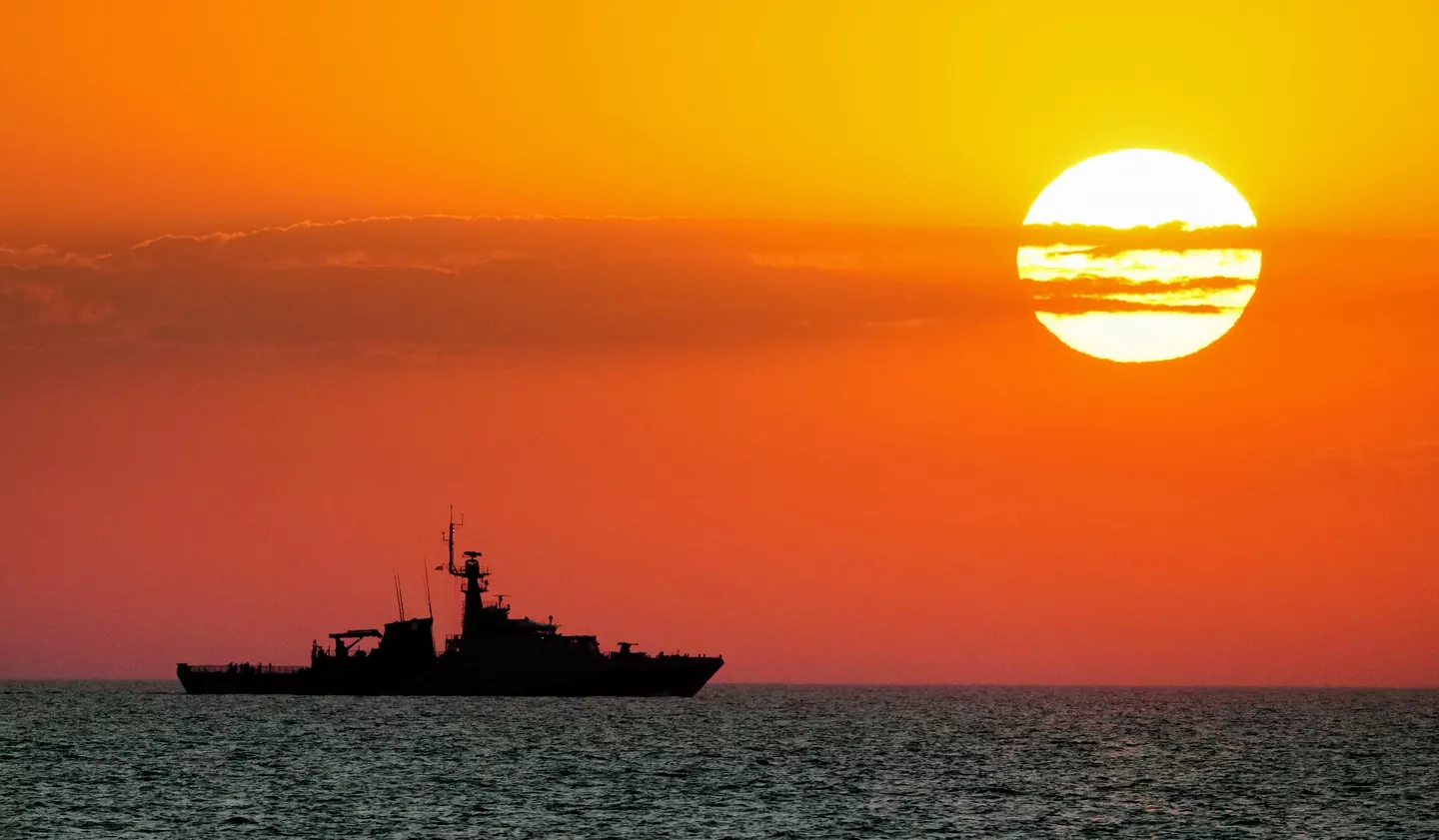
Aside from the previous discussion, the truth is that the so-called war on drugs appears to be entering a new chapter: Since August of this year, the administration of President Donald Trump has ordered an unprecedented naval deployment of U.S. combat forces in the Caribbean, specifically off the coast of Venezuela. Since then, and to date, the U.S. government has bombed at least four boats in the Caribbean Sea off the coast of that country, in international waters, claiming the lives of at least 21 people and promising there are more attacks to come.
The United States claims that these were drug trafficking vessels bound for the U.S. coast but has not provided further details about the people on board, nor has it been possible to verify their affiliation with “drug trafficking” or “terrorist” groups. President Trump has attempted to justify these attacks on various legal grounds, including the right to self-defence (arguing that the occupants of the boats were terrorists) or, as stated in a leaked memo sent to the United States Congress, claiming they are part of a “non-international armed conflict.” However, many question the legitimacy of the boat strikes, considering them to be violations of international law. Experts even claim that these attacks reflect a “foreseeable legal overreach” that follows the precedents set during the administrations of George W. Bush, Barack Obama, and Joe Biden following the September 11 attacks and subsequent interventions in Afghanistan, Iraq, and Yemen.
For its part, the Venezuelan situation is no secret: the South American country has been experiencing a profound social and economic crisis for more than a decade, causing the mass exodus of millions of Venezuelans to neighbouring countries (mainly Colombia), the United States, and Europe. The causes of this situation are also no secret: Throughout the 21st century, the country has been governed by the political movement known as “Chavismo,” which has shown intolerance of political dissent, violated human rights, and led the country to widespread poverty and an economic crisis that has resulted in the de facto dollarisation of Venezuela and a permanent deficit in the provision of basic services.
The traditional isolationist policy accompanied by economic sanctions against the Caribbean country has proven ineffective: The regime does not appear to have plans to leave power, the military forces are loyal because of the economic benefits they receive (more akin to bribes), a large part of the opposition lives in exile or in hiding (among which is the recent Nobel Peace Prize winner for 2025, María Corina Machado), and in the last elections, electoral fraud became evident to the world.
In addition, various narco-terrorist gangs operate in the country, such as the so-called “Tren de Aragua” and, most notably, the “Cartel of the Suns,” allegedly led by high-ranking officials of the Venezuelan regime. This is the case with President Nicolás Maduro himself; Diosdado Cabello, current Minister of “Internal Affairs, Justice, and Peace”; and Vladimir Padrino López, current Minister of Defence; all of whom U.S. intelligence services have offered rewards in exchange for information leading to capture.
This set of circumstances has served as justification for the U.S. government to deploy its military forces off the Venezuelan coast, using neighbouring islands as bases for operations or surveillance. Various officials of the Chavista regime have stated that this is a prelude to a military intervention in the Caribbean country, the goal of which is the overthrow of the current government and a subsequent regime change. Regarding this, Venezuelan Defence Minister Vladimir Padrino López warned of possible U.S. attacks, either with drones or special forces that could carry out “targeted assassinations.”
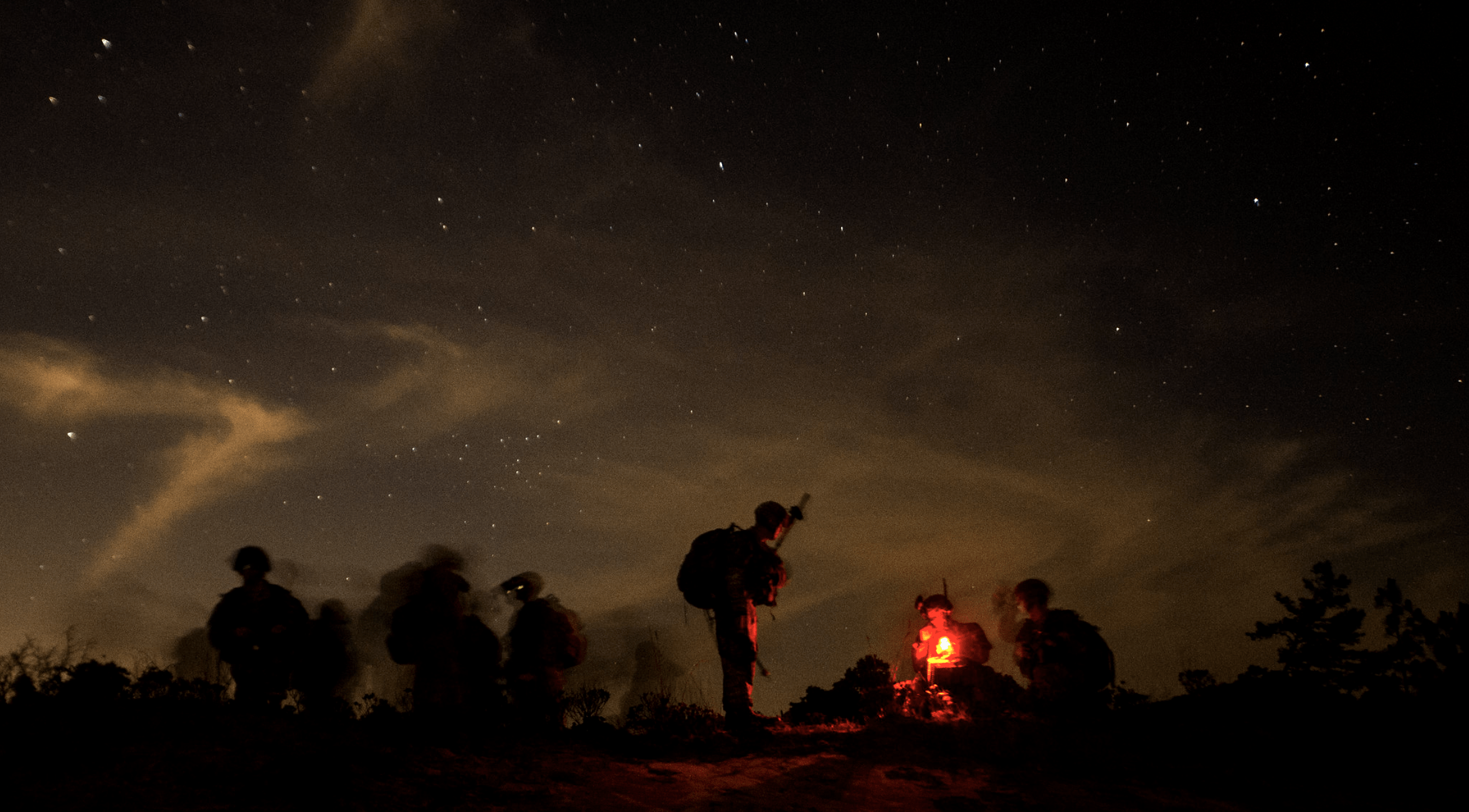
The militarisation of the war on drugs is not new and dates to 1989, when President George H. W. Bush implemented a “national drug control strategy” focused primarily on interdicting supplies, allocating extensive resources to involve the Department of Defence in these tasks. This included the creation of the Office of National Drug Control Policy and the formal authorisation of the use of military forces in detection efforts, training foreign forces, and supporting law enforcement agencies.
That same year, the U.S. government used the “war on drugs” as a pretext to intervene in another country: then-President George H. W. Bush ordered the invasion of Panama with the stated goal of overthrowing the then de facto ruler, Manuel Noriega, following the declaration of a “state of war” between Panama and the United States by the Panamanian General Assembly, coupled with U.S. authorities’ accusations of organised crime and drug trafficking against Noriega.
Thus, there are reasons to believe that the “anti-drug” operations have a hidden purpose: Such a mobilisation on the Venezuelan coast had never been seen before, for the simple reason that drug trafficking to the United States occurs primarily along the Pacific coast. In that sense, the U.S. naval deployment, with the sole objective of bombing boats without any “greater” purpose than stopping drug trafficking in an area where most of the drug trafficking to the United States does not even occur, is at least “curious.”
So: Is this a continuation of more than 50 years of anti-drug operations, or are we on the cusp of a military intervention in Venezuela?
Although everything we can say now remains speculation, a large-scale military intervention does not seem likely. Rather, it seems that these “anti-drug” operations are being used as a mechanism to pressure Nicolás Maduro’s government, seeking an organised and nonviolent transition of power, given the evident illegitimacy and accusations against him.
The truth is that it seems that the two objectives are not entirely unrelated. Rather, it seems that the war on drugs is being used to justify intervention in Venezuela. As we have seen, this would not be the first time something similar has occurred in U.S. foreign policy: is it now a constant?